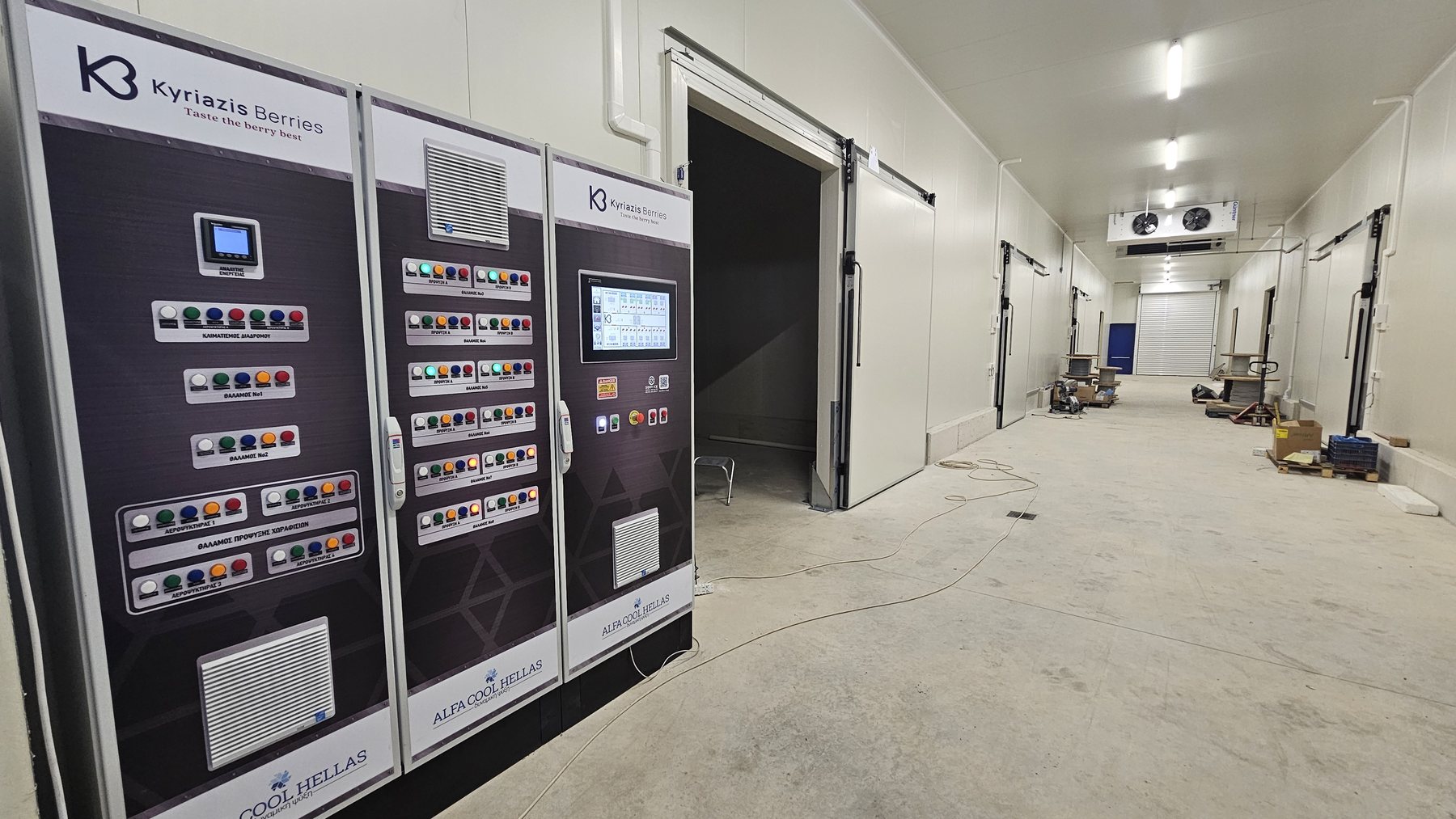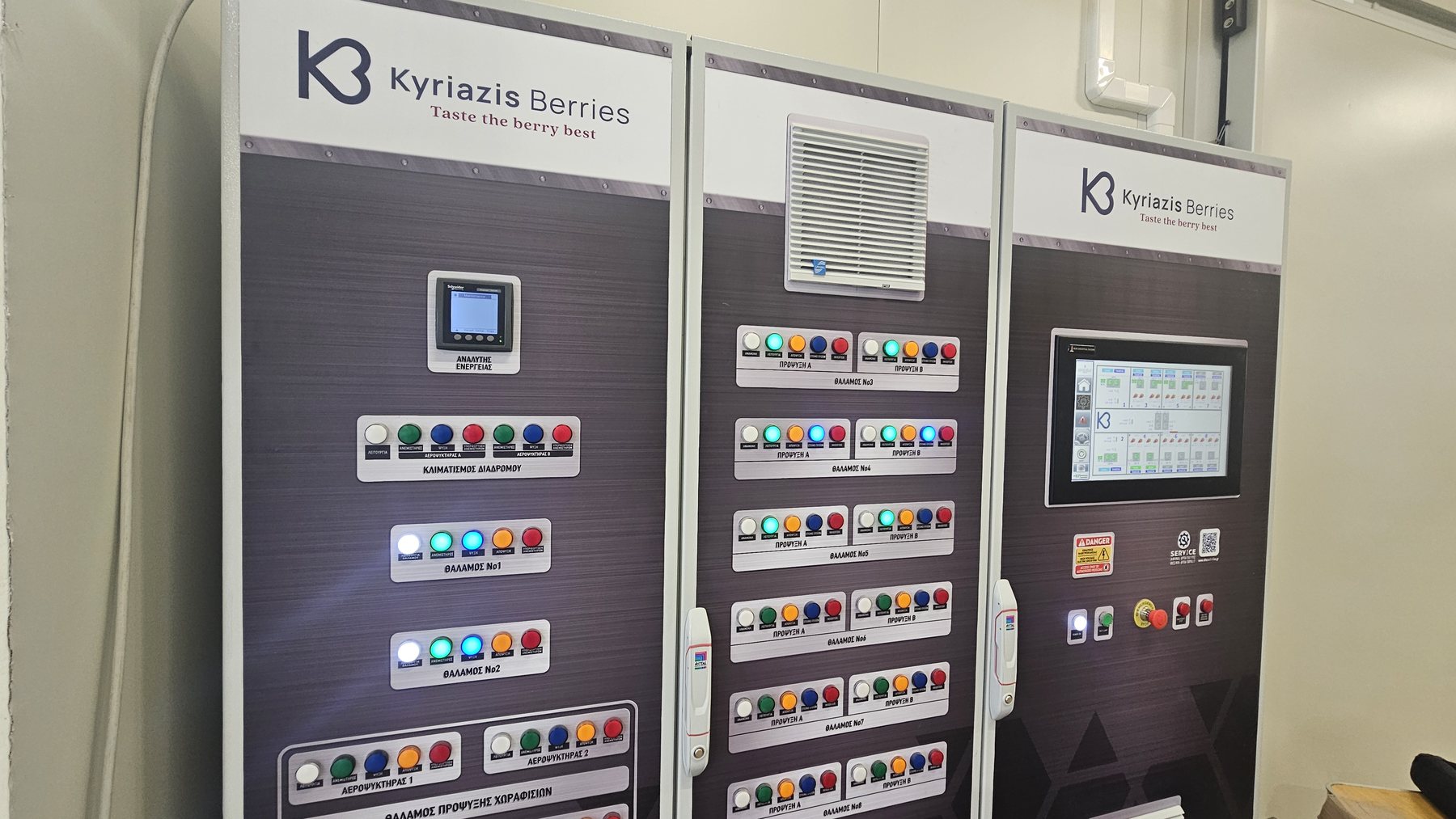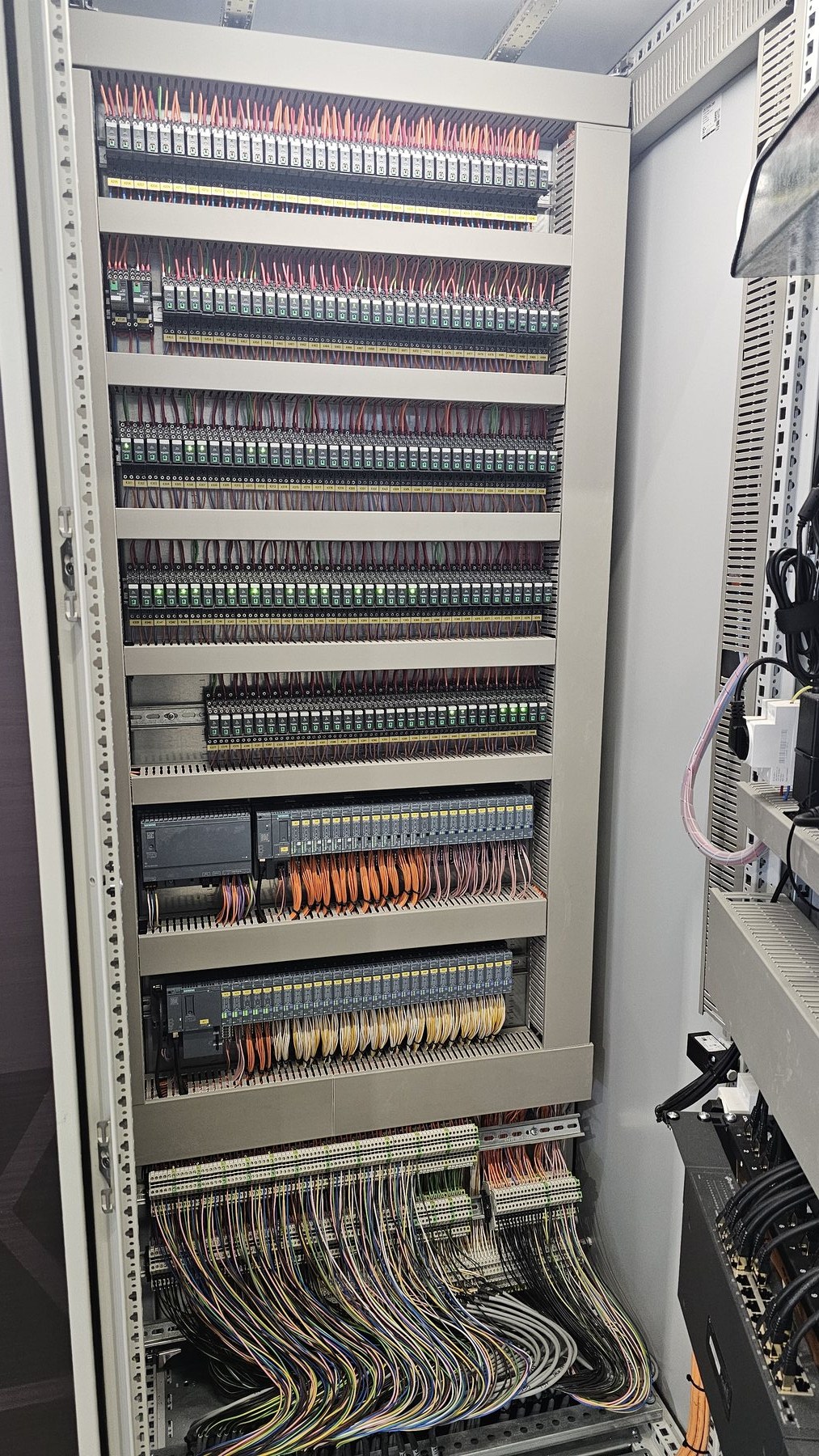
A Siemens SIMATIC S7-1500 control system for eight independent dynamic pre-cooling chambers, engineered for the exacting precision that strawberry handling demands.
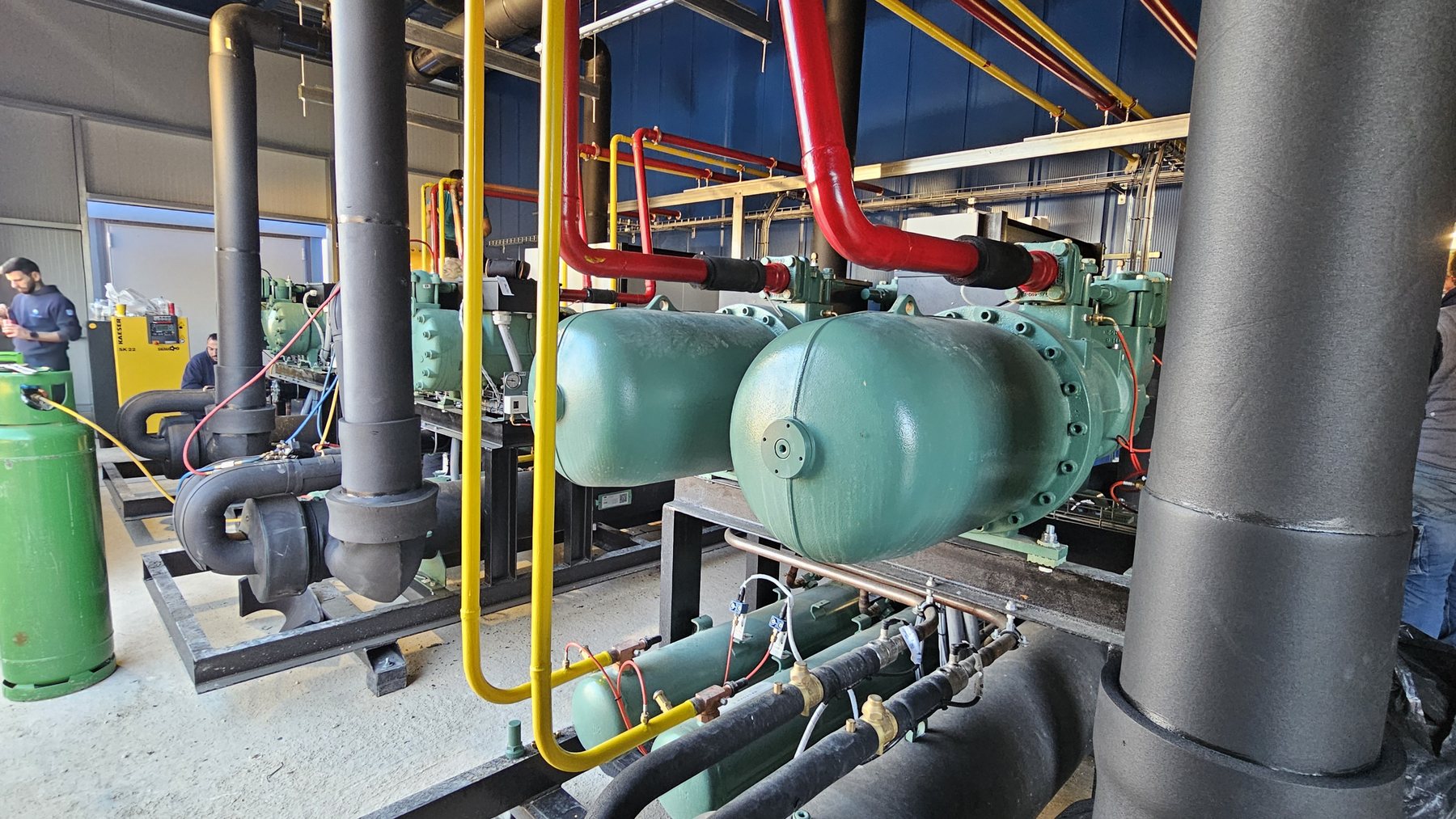
KPautomation delivered the electrical automation for Kyriazis Berries' new pre-cooling and cold storage facility, built for one of the most organized strawberry handling and packing operations in Greece. The installation comprises eight independent cold chambers (Chamber 1 through 8), a dedicated pre-cooling chamber for produce arriving straight from the field, climate control for the central handling corridor, and forced-air units serving the reception and preparation areas. The cooling method applied is dynamic (forced-air) pre-cooling for product in flow-pack packaging, targeting uniform cooling throughout the load — down to the inside of the pallet — while maintaining the cold chain to ISO 22000 requirements. Facility layout and pre-cooling method design were carried out by Isofruit Project, and the refrigeration plant was installed by Alfa Cool Hellas; KPautomation designed, built and programmed the electrical control panel that coordinates the whole system, including automation control of the glycol machine room.
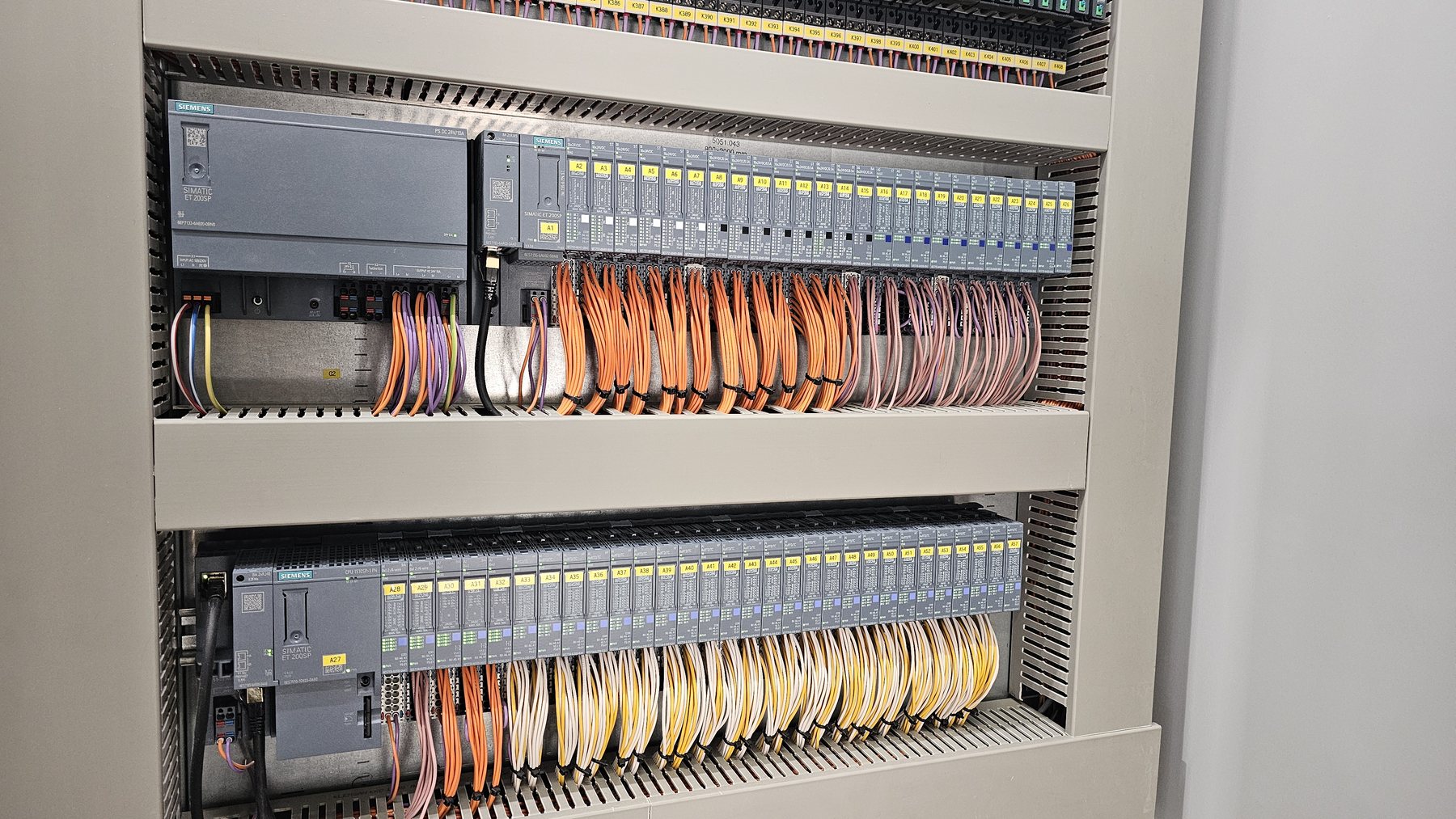
The control panel is built around a Siemens SIMATIC S7-1500 PLC, with its I/O modules mounted in a row on the same rack inside the panel. The choice was deliberate: each of the eight chambers needs independent temperature and humidity measurement, separate control of pre-cooling circuits A & B per chamber, commands for air coolers and fans, monitoring of cold-room doors, and management of defrost cycles — parameters that, multiplied across eight chambers plus the field pre-cooling chamber and the corridor, add up to several hundred digital and analog signals, visible in the sheer number of I/O channels packed into the panel. The S7-1500's modular architecture is built exactly for this volume of signals: it lets as many I/O cards be added as the installation needs, gives fault diagnostics down to the individual channel, and allows the facility to be expanded with additional chambers later without redesigning the panel.
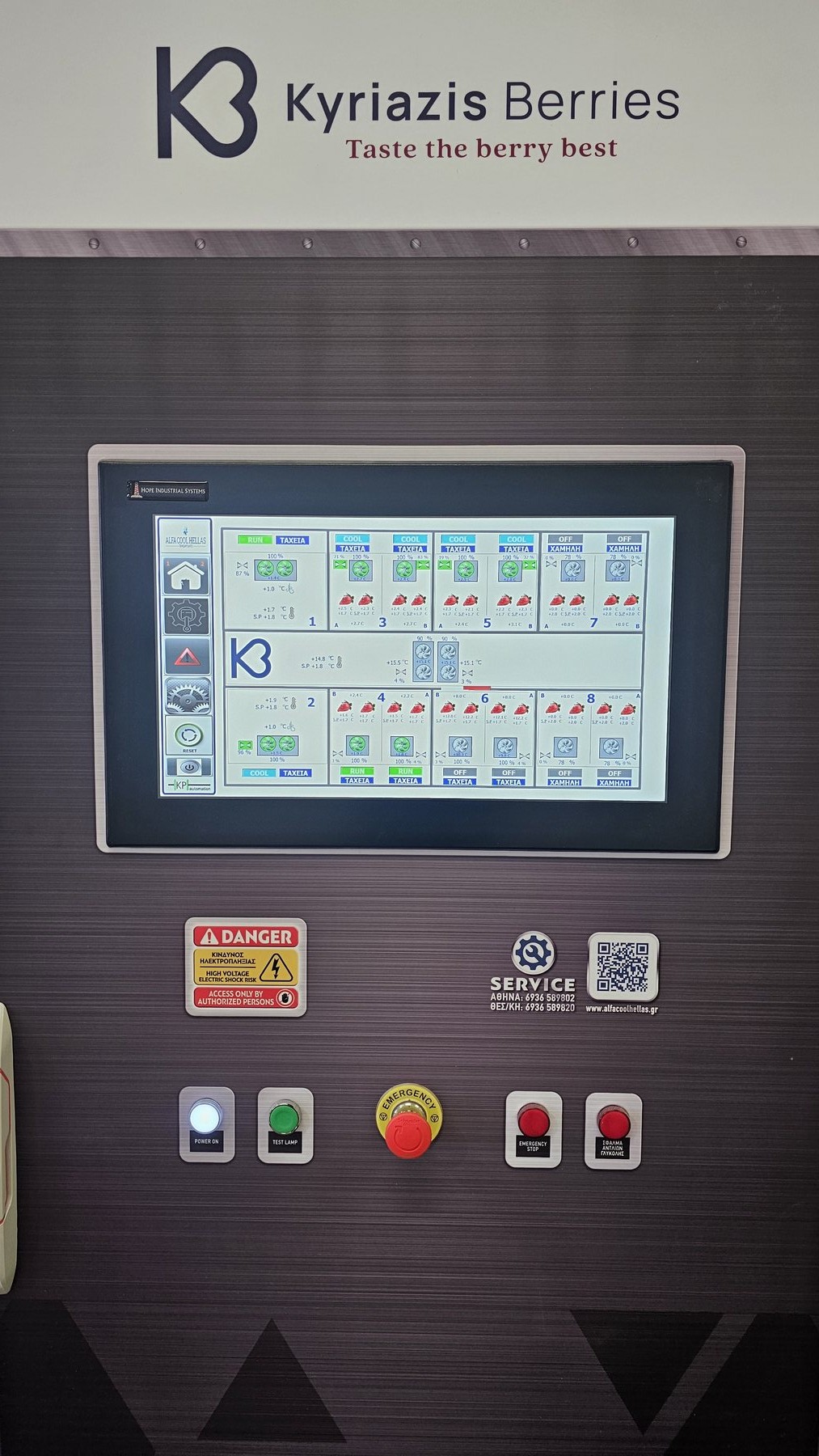
Supervision runs through a central colour touchscreen HMI that displays a single mimic screen of all eight chambers, with temperature, humidity and fan status for each, so the operator gets an immediate, at-a-glance view of the whole facility and can intervene selectively wherever needed. The panel also integrates a Schneider Electric energy analyzer that logs the facility's power consumption — critical data for a plant where refrigeration runs almost continuously.
Unlike most strawberry pre-cooling installations, the Kyriazis Berries machine room does not rely on direct expansion of refrigerant inside each chamber. Instead, it produces chilled glycol at a central point and distributes it, through a network of pumps and valves, to the air coolers of the eight cold chambers and the field pre-cooling chamber. It is a more demanding cooling architecture — but a distinctly superior one: it delivers greater temperature stability, enhanced safety in a food-handling environment, and the flexibility to serve multiple, independent loads at the same time.
Automating a system of this kind is, in itself, a significant technical challenge. The PLC must apportion, in real time, the correct glycol flow and temperature across eight simultaneous, independent loads — each with its own shifting cooling demand — without serving one chamber at the expense of the others. Variable-speed pump control, per-circuit valve management and continuous load balancing all demand absolute precision, since any instability in the glycol temperature translates directly into instability inside the chambers — something strawberries do not forgive. It is precisely this complexity that justifies the choice of a Siemens SIMATIC S7-1500 PLC over a simpler, local control solution.
Strawberries are among the most perishable fresh produce there is: after harvest, the "field heat" they carry has only a few hours before it must be removed through pre-cooling, or quality, texture and shelf life degrade irreversibly. Getting it right requires very tight temperature margins and high relative humidity, to limit moisture loss and the growth of moulds such as Botrytis, without letting condensation form on the fruit itself. Because every batch arrives with a different ripeness and field temperature, the eight chambers need to be able to run different cooling programmes at the same time — something a simple thermostat, or a single shared control, cannot do.
That is exactly why such an advanced automation system is justified: the targeted airflow of dynamic pre-cooling, combined with high-precision sensors and an independent closed control loop per chamber, is what guarantees a stable temperature throughout the load, a longer shelf life, and significantly reduced quantity and quality losses. For a product with such a narrow margin for error, the precision of the automation translates directly into commercial value.
With the fruit's freshness, taste and nutritional value preserved from the very first hour after harvest, Kyriazis Berries' strawberries can travel further and reach demanding export markets without compromising on quality — automation adding real competitive value to the finished product.